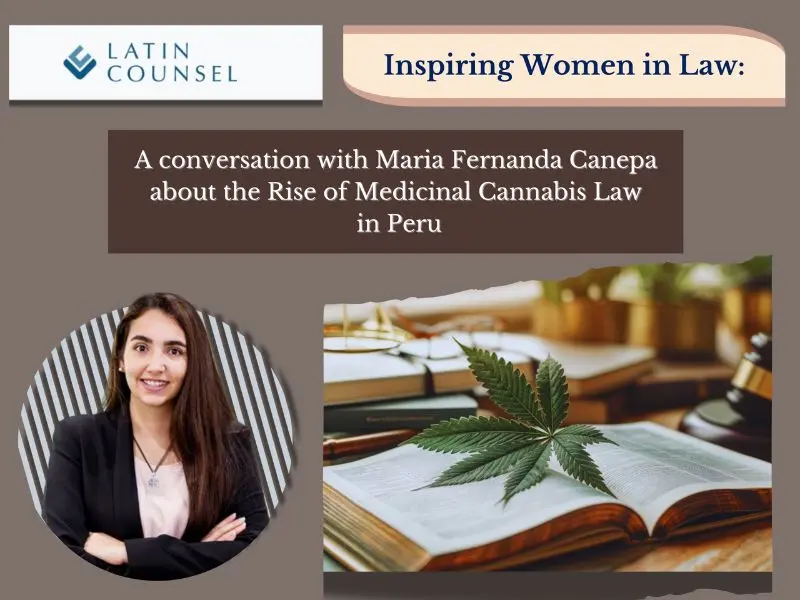
“Latin Counsel has had the pleasure of interviewing Maria Fernanda Canepa, intellectual property specialist at OMC Abogados & Consultores in Peru, to discuss the establishment of a new practice area focused on medical cannabis legislation.
With the enactment of Law No. 30681, OMC Abogados has taken a pioneering step by establishing a practice area dedicated to addressing the complexities and challenges surrounding this emerging sector. Maria Fernanda shares her insights on the legal landscape, the opportunities it presents and the vital social impact of medical cannabis on patients’ lives. Join us to explore the motivations behind this innovative initiative and the transformative potential it holds for the future of healthcare in Peru.
Latin Counsel: What motivated OMC Abogados to establish this new practice area?
María Fernanda Canepa: We decided to establish this new practice area because we identified a unique opportunity to contribute to the development of an emerging and highly regulated sector: medical cannabis. Since the enactment of Law No. 30681, we observed that many companies, healthcare professionals and patients faced challenges in understanding and complying with the legal requirements necessary to operate within the regulatory framework. In addition, we recognized that our expertise in regulatory and corporate law could make a significant difference by providing strong support in areas such as licensing, negotiating commercial contracts and ensuring regulatory compliance. We are driven by the positive social impact that medical cannabis has on the lives of thousands of patients, as well as Peru’s potential to become a regional leader in this industry.
Latin Counsel: ¿What do you consider to be the strongest points of the new law in terms of access to medical cannabis?
María Fernanda Canepa: The law has several strong points: it recognizes the right to medicinal and therapeutic use of cannabis and its derivatives, promotes scientific research and establishes a comprehensive licensing system that regulates cultivation, production and distribution.
Latin Counsel: How do you evaluate the clarity of the administrative processes for obtaining licenses?
María Fernanda Canepa: Although the legal framework establishes clear procedures, it is often perceived as complex due to numerous requirements, such as the submission of technical studies, compliance with safety standards and coordination with multiple entities such as DIGEMID and SUNAT.
Latin Counsel: What are the main challenges faced by professionals and companies in complying with current regulations?
María Fernanda Canepa: Professionals and businesses face high costs associated with permits and licenses, stringent technical requirements and strict supervision. In addition, there is often a lack of prior experience in the regulated sector and a prevailing social stigma surrounding cannabis use.
Latin Counsel: What measures could be implemented to streamline the licensing and permitting process?
María Fernanda Canepa: Simplifying administrative procedures through digital platforms, providing specific training to civil servants and legal operators, and establishing more defined deadlines for the evaluation of applications could significantly improve the process.
Latin Counsel: How has the social perception of medical cannabis changed since the implementation of the law?
María Fernanda Canepa: There has been a positive change, especially among patients and their families, who now see medical cannabis as a legitimate and legally supported therapeutic alternative.
Latin Counsel: What changes do you expect to see in medical cannabis legislation in the coming years?
María Fernanda Canepa: I hope to see the inclusion of more diseases in the list of authorized therapeutic uses, greater support for cultivolocal and reforms to facilitate scientific research.
Latin Counsel: What advice would you give to Peruvian legislators to improve the regulatory framework for medical cannabis?
María Fernanda Canepa: Legislators should encourage public policies that facilitate research, reduce licensing costs to encourage local business participation, and promote public education campaigns to eliminate stigma.
Latin Counsel: What motivated you to join this new medical cannabis practice area at OMC Abogados?
María Fernanda Canepa: I decided to join this practice because it combines legal challenges with a strong social component. The law can serve as a vehicle to ensure safe and regulated access to life-enhancing treatments for thousands of patients. In addition, this practice allows me to be at the forefront of an innovative field, exploring opportunities in the pharmaceutical industry, commerce and scientific research, while promoting an ethical and responsible approach.
Latin Counsel: What specific challenges has OMC encountered in establishing this new practice area?
María Fernanda Canepa: OMC has faced challenges such as understanding the complexity of regulations, advising within a legal framework that is still evolving, and building trust with clients concerned about legal or social risks.
Latin Counsel: What do you think are the most promising opportunities in the medical cannabis sector in Peru?
María Fernanda Canepa: The most promising opportunities include the expansion of local licensed cultivation, the development of innovative medicinal products and the export of by-products.
Latin Counsel: How does the firm handle ethical and legal issues in this innovative area?
María Fernanda Canepa: OMC Abogados strictly adheres to current regulations, prioritizing ethical and legal compliance to protect both clients and patients who rely on medical cannabis.
Latin Counsel: Have you worked on any noteworthy cases within this new practice, and can you share details about their impact?
María Fernanda Canepa: An outstanding case was advising a national company from its establishment as a pharmaceutical wholesaler to obtaining the required licenses.
Latin Counsel: What types of clients typically seek advice in this area and what are their main concerns?
María Fernanda Canepa: Our clients include pharmaceutical companies concerned about licensing and regulatory compliance, patients and NGOs interested in access and availability of treatments, and researchers seeking guidance on research permits.
Latin Counsel: What is your vision of the future of medical cannabis in Peru and how will OMC Abogados position itself in this context?
María Fernanda Canepa: The future of medical cannabis in Peru is promising, with more investment, innovation and social acceptance. OMC Abogados will position itself as a leader in providing comprehensive advice in this area.
Latin Counsel: What advice would you give to other lawyers looking to specialize in medical cannabis?
María Fernanda Canepa: I recommend thoroughly studying current regulations, both nationally and internationally, and keeping up to date on changes in this constantly evolving industry. It is essential to acquire expertise in areas such as corporate law, regulatory law, public health and pharmaceutical commerce. Close collaboration with physicians, pharmacists and researchers will help lawyers understand the needs of the industry. Acting with an ethical and responsible approach will ensure benefits for patients, and developing a strategic vision will help identify legal opportunities in areas such as intellectual property, commercial contracts and exports within this emerging industry.